
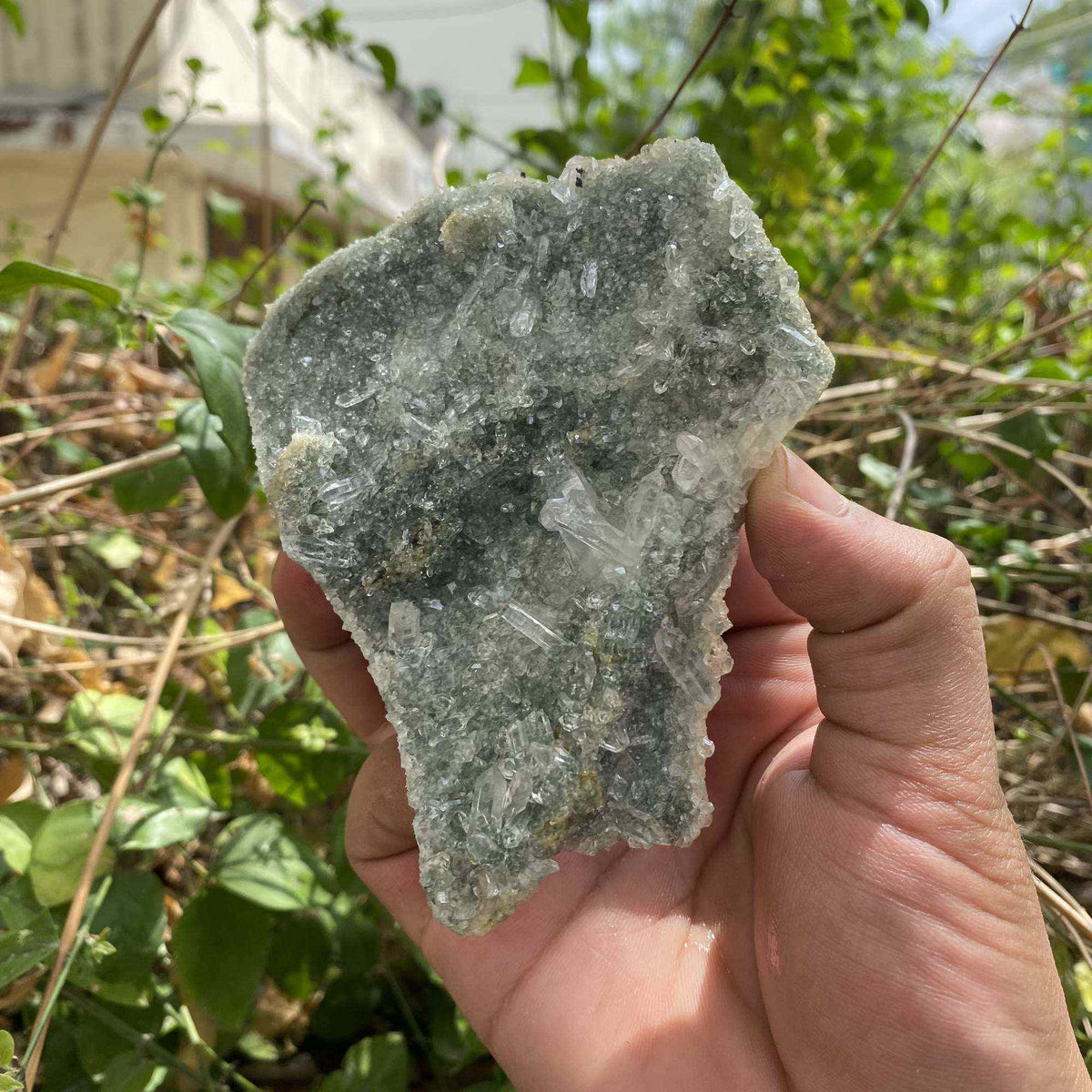
A chlorite quartz cluster combines the geometric structure of quartz with naturally occurring green, grey-green or darker mineral inclusions. In some specimens chlorite forms soft internal clouds or surface coatings; in others it creates distinct phantom-like growth layers. Because the pattern is produced during mineral formation, every cluster develops its own arrangement.
That combination of crystal architecture and mineral inclusions has made chlorite-bearing quartz a popular category among mineral collectors. Understanding the formation can also help you distinguish a genuine growth feature from a simple colour description.
What is chlorite in quartz?
Chlorite refers to a group of sheet silicate minerals that commonly occur in low- to moderate-temperature geological environments. During quartz growth, chlorite can become trapped inside the crystal, coat an earlier growth surface or remain on parts of the exterior.
The result may appear mossy, leafy, dusty, layered or cloud-like. Colour can vary from pale green to deep forest tones and may look different under warm indoor light, daylight or direct photography.
How a chlorite quartz cluster forms
A quartz cluster develops when multiple crystals grow together from the same base or matrix. If chlorite is present in the mineral-forming environment, it may be incorporated during one or more stages of that growth.
When quartz growth pauses and chlorite coats the existing crystal faces, later quartz can grow over that coating. This can preserve the outline of an earlier crystal stage and create a green phantom. If chlorite enters the crystal in a less organized way, the result may be dispersed inclusions rather than a distinct phantom.
Chlorite quartz cluster vs green phantom quartz
The terms overlap but are not identical. A chlorite quartz cluster simply contains chlorite associated with quartz. A green phantom quartz specimen should show an internal growth outline resembling an earlier crystal form. Chlorite is one mineral that can create that effect, but chlorite may also occur without forming a clear phantom.
For accurate collecting, describe what is visibly present. If the specimen shows a sharp internal outline, “chlorite phantom quartz” may be appropriate. If the green material is scattered or concentrated in pockets, “chlorite included quartz” may be the clearer description.
What collectors look for
There is no single ideal chlorite quartz cluster. Some collectors prefer transparent quartz with sharply visible green inclusions. Others favour heavily included pieces where chlorite becomes the dominant visual feature. Complex clusters with several well-formed points can be particularly attractive because each point may show a different inclusion pattern.
Useful qualities to compare include crystal termination, overall composition, contrast, visibility of inclusions, condition of the points, natural base or matrix and the balance of clear and included areas. A specimen with natural contacts or minor imperfections can still be highly collectible when its formation is unusual or visually strong.
How to choose a chlorite quartz cluster online
First, check whether the photographs show the actual item rather than a representative sample. For one-of-a-kind minerals, you should be able to compare front, side and close-up views. Read the listed dimensions and weight before judging scale from photographs.
Next, look closely at the green material. Natural chlorite may vary in density and colour across the piece. It can follow internal growth surfaces, collect around the base or appear in isolated areas. Variation is expected.
Finally, review condition notes. Clusters contain many exposed points, so natural contacts and small edge chips can occur. Accurate photography and clear disclosure are more useful than an unrealistic expectation of perfect symmetry.
Traditional symbolism and “benefits”
In contemporary crystal traditions, chlorite-bearing quartz is often symbolically connected with nature, grounding, renewal and reflection. Some collectors place it in meditation or study spaces because they enjoy those associations as well as the mineral's appearance.
Such uses are matters of personal or spiritual belief and are not scientifically established medical benefits. Mineral specimens should not be used in place of professional healthcare.
Care and display
Use a soft brush to remove ordinary dust and avoid dropping or knocking the cluster against hard surfaces. Although quartz itself is durable, thin secondary points can be delicate. Before using liquids or cleaning agents, remember that a specimen may contain minerals other than quartz.
For display, side lighting can bring out the depth of chlorite inclusions and make internal layers easier to see. A light neutral background works well for darker green specimens, while very pale inclusions may show more clearly against a slightly darker neutral setting.
Related guides
Read our existing guide to Himalayan green chlorite for more background on the mineral. If your specimen shows distinct internal growth outlines, continue with our white and green phantom quartz guide.
At Himalaya Quartz, natural clusters are individually photographed so collectors can assess the actual crystal form, inclusion pattern and condition before choosing a specimen.