Green phantom quartz is one of the most distinctive varieties of included quartz. Inside a transparent or translucent quartz point, earlier stages of crystal growth appear as ghost-like outlines, often coloured green by chlorite or related mineral inclusions. Each specimen records part of its own formation history, which is why green phantom quartz attracts mineral collectors as well as people interested in traditional crystal symbolism.
Searches for green phantom quartz benefits often mix two very different ideas: the geological qualities that make the material interesting to collect, and the symbolic meanings associated with it in crystal traditions. This guide separates those clearly so you can understand the stone without confusing belief with science.
What is green phantom quartz?
A phantom forms when a quartz crystal temporarily stops growing, another mineral coats part of its surface, and quartz growth later resumes around that earlier outline. The result can look like a smaller crystal preserved inside a larger one. In green phantom quartz, the visible phantom is commonly associated with green mineral inclusions such as chlorite.
The pattern may be sharp and geometric or soft and cloud-like. Some specimens show a single phantom, while others contain several layers. Natural variation is expected: colour, clarity, inclusion density and phantom shape can differ greatly from one specimen to another.
Why collectors value green phantom quartz
For collectors, the main benefit is not a promised effect but the specimen's visual and geological character. A well-defined phantom can show an earlier stage of crystal growth in a way that is easy to see with the naked eye. Collectors often look for strong internal outlines, attractive contrast between green inclusions and clear quartz, intact crystal points, natural lustre and an overall form that displays the phantom clearly.
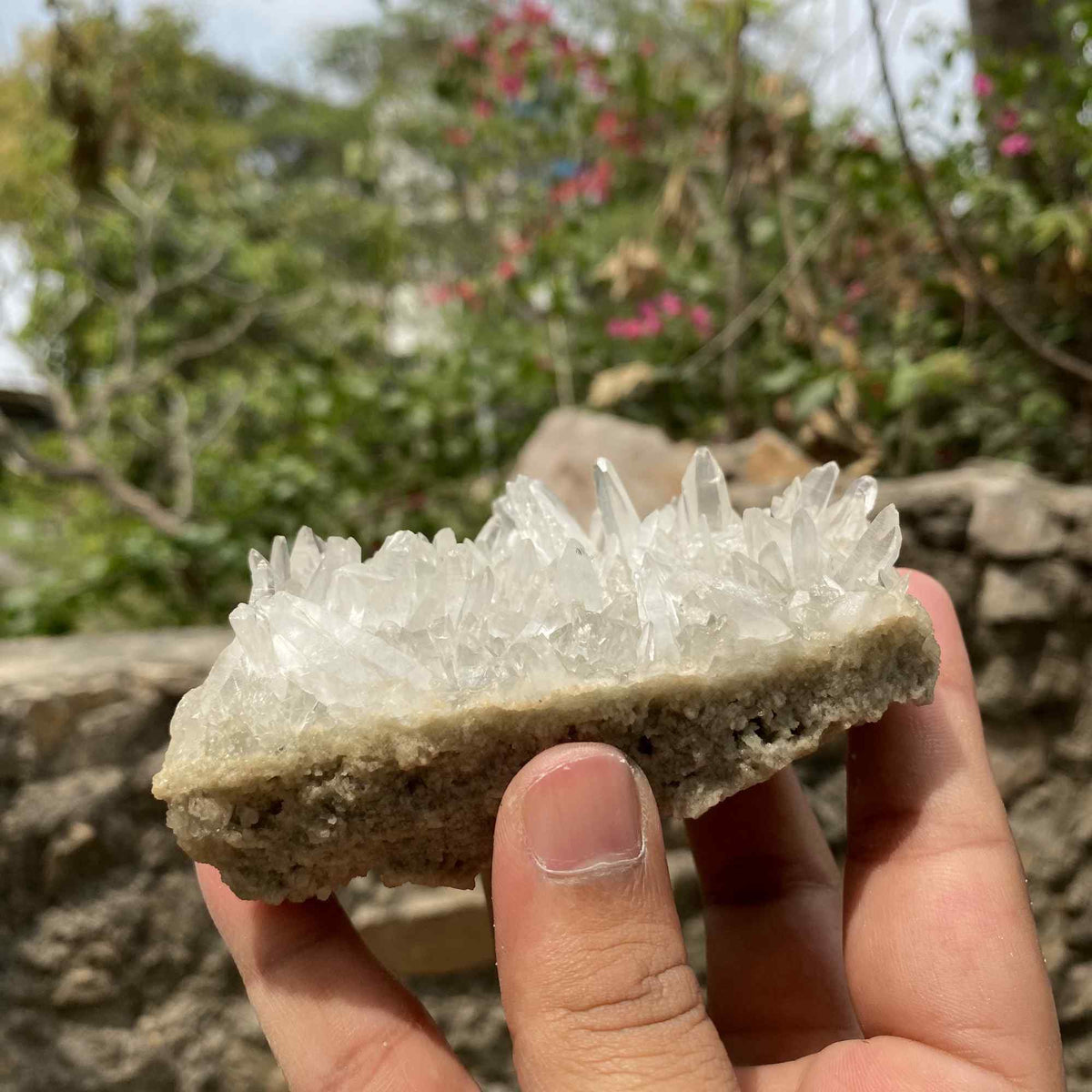
Clusters can be especially interesting because several points may contain different inclusion patterns. A single specimen can therefore show multiple growth histories rather than one uniform appearance.
Green phantom quartz meaning and traditional beliefs
In modern crystal traditions, green phantom quartz is commonly associated with growth, renewal, reflection and connection with nature. Some people keep it near a desk, meditation space or personal collection as a symbolic reminder of patience and gradual progress.
These associations are spiritual or cultural beliefs rather than medically proven effects. Green phantom quartz should not be treated as a substitute for professional medical or mental-health care.
How to identify a natural green phantom
Look through the crystal rather than only at its outer surface. A true phantom should appear as an internal outline or growth layer that follows part of the geometry of the quartz. Green material may appear as fine coatings, mossy areas, veils or concentrated zones. Natural specimens also commonly contain small fractures, wisps, uneven clarity and other inclusions.
Perfectly identical patterns across many pieces would be unusual because natural quartz develops under changing geological conditions. When shopping online, inspect several photographs and look for images that show the specimen from more than one angle.
Green phantom quartz vs green included quartz
Not every quartz crystal with green material inside it is a phantom. The term phantom is most accurate when the inclusion outlines an earlier crystal-growth surface. If green inclusions are scattered without forming a recognizable growth outline, “green included quartz” or a more specific mineralogical description may be more precise.
This distinction matters for collectors because a clearly visible phantom is a structural feature, not simply a colour description.
What to look for before buying
Start with the feature that matters most to you. If you want a strong phantom effect, prioritize specimens with visible internal outlines and good contrast. If you prefer natural character, a piece with chlorite veils, multiple points and irregular inclusions may be more appealing. Check the listed weight and dimensions carefully because photographs can make a specimen look larger or smaller than it is.
Also review whether the piece is a single point or a cluster, whether the base is natural or cut, and whether any repairs or treatments are disclosed. Natural quartz should be expected to contain individual variations rather than factory-like consistency.
How to display and care for green phantom quartz
Display the specimen where indirect light can pass through the quartz and reveal the internal phantom. Avoid long exposure to intense heat and handle clusters carefully because smaller crystal points can be delicate. For routine cleaning, use a soft dry brush or a lightly damp cloth where appropriate, and avoid harsh chemicals unless you know the exact mineral composition of the inclusions.
Explore related Himalayan quartz
If you enjoy internal growth features, you may also like our guide to white and green phantom crystals. You can also explore the wider Himalayan quartz guide for more information about natural quartz characteristics and traditional meanings.
At Himalaya Quartz, every natural specimen is selected and photographed individually so collectors can evaluate the actual formation, inclusions and character of the piece they are considering.