
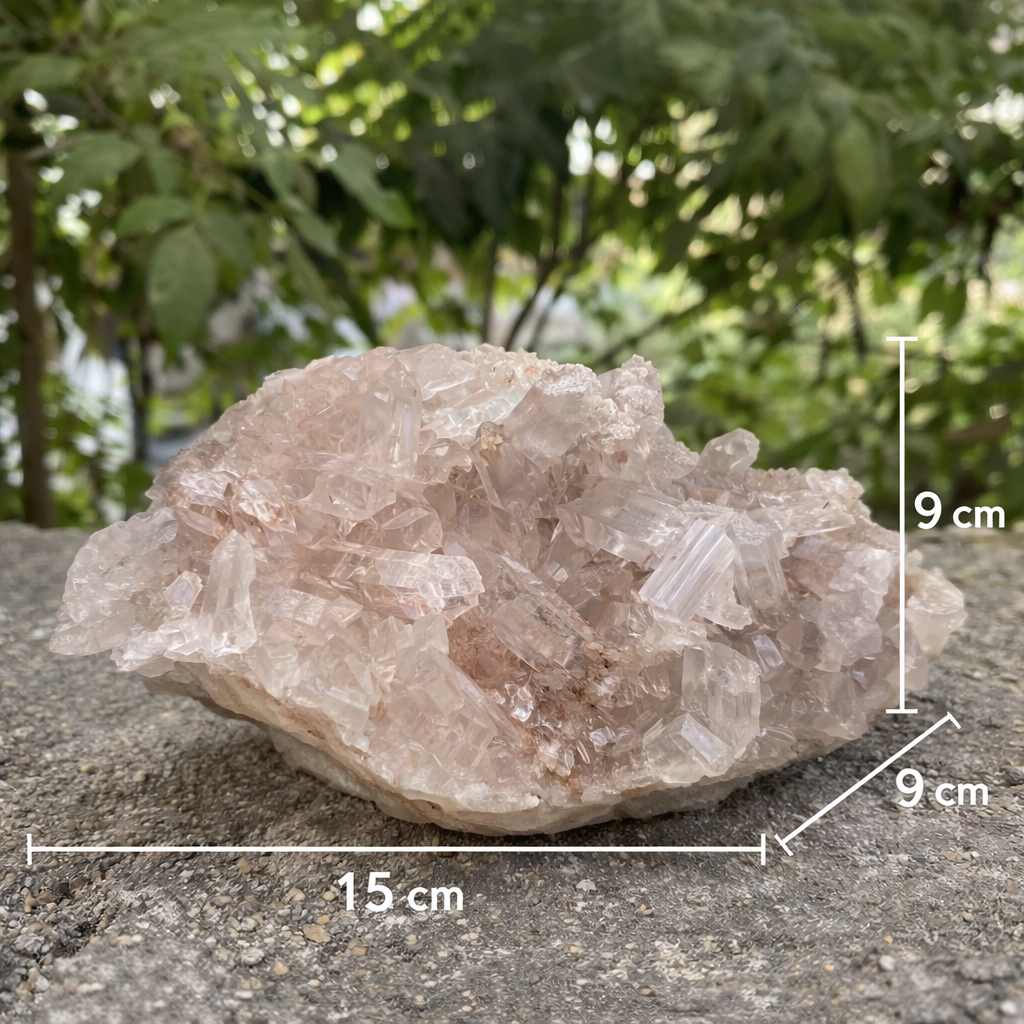

Online mineral shopping gives collectors access to unusual forms and locality-specific pieces, but it also makes careful inspection important. You cannot rotate the specimen in your hand, so accurate information and clear photography are essential.
Study all sides of the specimen
A strong listing should show the primary display face, opposite side and at least one close-up of important crystal features. Natural crystals can contain inclusions, contact marks and small imperfections. These are worth understanding, not automatically rejecting. Ask whether the photographs show the exact piece offered, especially when shape and cluster layout are individual.
Check measurements and mineral identification
Read length, width, height and weight together. A specimen photographed alone against white may appear much larger than it really is. Confirm the main mineral, any associated minerals and claimed locality where documented. Be cautious of vague claims about rarity or perfect formation without supporting details. For technical identification, rely on reputable mineral references rather than marketing labels alone.
Plan display and delivery
Larger clusters and delicate points require suitable protective packaging. Ask how the specimen will be secured for shipping and whether fragile areas need special handling. Once received, inspect it before removing every support. Store minerals safely and avoid cleaning methods that might damage unknown associated species.
Good collecting starts with curiosity, realistic photographs and a clear understanding of exactly what is being offered.
Explore related pieces: Shop the relevant Himalaya Quartz collection.
Shop Related Products at Himalaya Quartz
Explore these pieces from our current Shopify catalog. Product availability may change.


Related Gemstone Guides
Continue learning with these relevant Himalaya Quartz guides: