
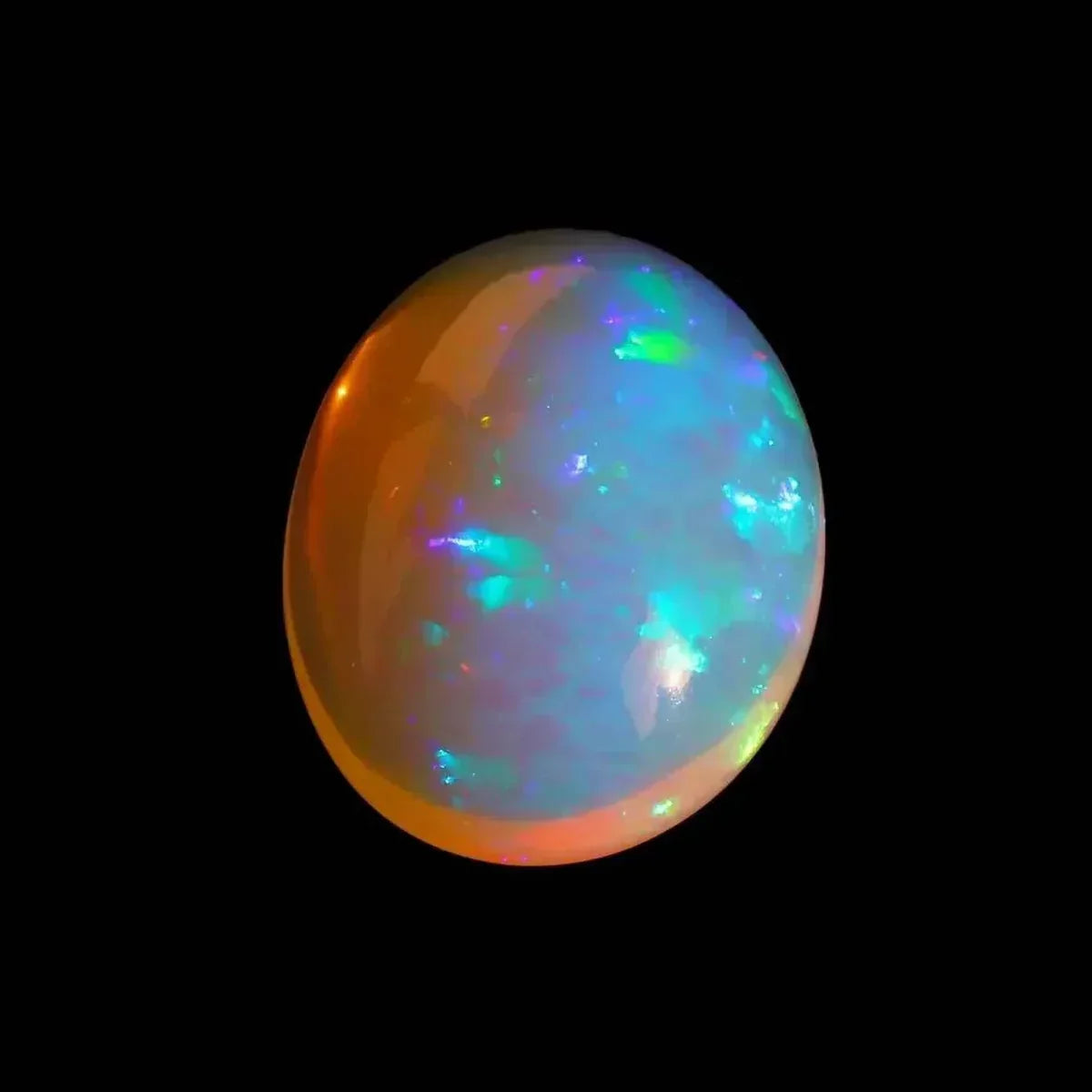
What Is Ethiopian Opal?
Ethiopian opal is one of the most visually spectacular gemstones in the world. Mined primarily in the Wollo Province of Ethiopia, these opals are celebrated for their intense play-of-color — a phenomenon where the stone flashes vivid spectral hues of red, orange, green, blue, and violet as it catches the light. Unlike Australian opals, Ethiopian opals are hydrophane, meaning they can absorb water, which temporarily alters their appearance and makes them uniquely responsive to their environment.
First discovered in the Shewa Province in 1994 and later in the Wollo (Welo) region in 2008, Ethiopian opals quickly became a favorite among gemstone collectors and jewelry designers worldwide. Their rich color saturation and relative affordability compared to Australian opals have made them one of the most sought-after stones of the 21st century.
Ethiopian Opal vs. Australian Opal: Key Differences
While both are beloved, Ethiopian and Australian opals differ in important ways:
- Origin: Ethiopian opals come from the highlands of Ethiopia; Australian opals are mined primarily in Lightning Ridge and Coober Pedy.
- Body tone: Ethiopian opals typically have a white, crystal, or chocolate body tone. Australian opals range from white to black.
- Hydrophane quality: Ethiopian opals are hydrophane — they absorb water and can temporarily lose their play-of-color when wet, then recover as they dry. Australian opals are generally not hydrophane.
- Color play: Both display stunning play-of-color, but Ethiopian opals are often praised for their particularly vivid, broad-flash patterns.
The Meaning and Metaphysical Properties of Ethiopian Opal
Opal has been revered across cultures for millennia. Ancient Romans called it opalus and considered it the most precious of all gemstones, believing it held the combined power of every colored stone. In crystal healing traditions, Ethiopian opal is associated with:
- Creativity and inspiration: The stone's ever-shifting colors are said to stimulate imagination and artistic expression.
- Emotional amplification: Opal is known as an emotional amplifier — it intensifies feelings, making it a powerful tool for those doing inner work.
- Hope and optimism: The bright, joyful play-of-color is linked to positive energy, new beginnings, and a hopeful outlook.
- The sacral and crown chakras: Ethiopian opal is often associated with both the sacral chakra (creativity, passion) and the crown chakra (spiritual connection, higher consciousness).
Ethiopian Opal as the October Birthstone
Opal is one of two official birthstones for October (alongside tourmaline), making Ethiopian opal a deeply meaningful gift for anyone born in this month. Its association with hope, creativity, and good fortune makes it a particularly thoughtful choice for birthdays, anniversaries, and milestone celebrations.
If you're shopping for an October birthday, an Ethiopian opal pendant or ring is a gift that carries both beauty and personal significance. Explore our Opal Pendant Necklace Collection and Opal Ring Jewelry Collection for handcrafted pieces featuring genuine Ethiopian opals.
Types of Ethiopian Opal
Not all Ethiopian opals look alike. Here are the main varieties you'll encounter:
- White/Light Opal: The most common variety, with a white or light body tone and vivid play-of-color. Versatile and wearable with any outfit.
- Crystal Opal: Transparent to semi-transparent with a clear body, allowing light to pass through and intensify the color play. Highly prized.
- Chocolate/Mocha Opal: Features a warm brown body tone that makes the play-of-color appear especially rich and dramatic.
- Smoked Opal: Treated with smoke to darken the body tone, enhancing the contrast of the color play. A more affordable alternative to naturally dark opals.
How to Evaluate Ethiopian Opal Quality
When choosing an Ethiopian opal, consider these key quality factors:
- Play-of-color: Look for broad, vivid flashes that cover as much of the stone's surface as possible. Red and orange flashes are the rarest and most valuable.
- Body tone: Crystal and chocolate body tones are generally more prized than plain white.
- Clarity: Some inclusions are natural and acceptable, but avoid stones with deep cracks (crazing) that could affect durability.
- Cut: Opals are typically cut as cabochons (smooth, domed) to best display their color play. Well-proportioned cuts maximize the visual effect.
- Size: Larger stones with strong color play command premium prices.
How to Care for Ethiopian Opal Jewelry
Because Ethiopian opals are hydrophane, they require a little extra care compared to other gemstones:
- Avoid prolonged water exposure: Remove opal jewelry before swimming, bathing, or washing dishes. While brief contact with water won't permanently damage the stone, extended soaking can temporarily suppress the play-of-color and, over time, may cause crazing in some stones.
- Keep away from chemicals: Perfumes, lotions, and cleaning products can damage the surface of your opal. Apply these products before putting on your jewelry.
- Store carefully: Store opal jewelry in a soft pouch or lined jewelry box, away from harder gemstones that could scratch the surface.
- Clean gently: Wipe with a soft, dry cloth. If needed, use a very slightly damp cloth and dry immediately. Never use ultrasonic cleaners or steam cleaning.
- Avoid extreme temperatures: Sudden temperature changes can cause thermal shock and cracking. Keep opal jewelry away from direct sunlight for extended periods.
How to Style Ethiopian Opal Jewelry
Ethiopian opal's iridescent play-of-color makes it a natural statement piece. Here are a few styling tips:
- Let it be the star: Opal jewelry pairs beautifully with neutral tones — white, cream, beige, and soft grey — that allow the stone's colors to take center stage.
- Mix metals thoughtfully: Ethiopian opal looks stunning in both silver and gold settings. Silver enhances the cool blue and green flashes; gold brings out the warm reds and oranges.
- Layer mindfully: If layering necklaces, keep other pieces simple so the opal pendant remains the focal point.
- Day to evening: A simple opal stud or pendant transitions effortlessly from daytime casual to evening elegance.
Browse our full Opal Gemstone Jewelry Collection to find the piece that speaks to you.
Frequently Asked Questions About Ethiopian Opal
Is Ethiopian opal real opal?
Yes, absolutely. Ethiopian opal is 100% natural opal, formed over millions of years through the same geological processes as all precious opals. It is not synthetic or simulated.
Why does my Ethiopian opal look different in water?
Ethiopian opals are hydrophane, meaning they have a porous structure that absorbs water. When wet, the stone may temporarily appear more transparent or lose some of its play-of-color. This is completely normal and reversible — the color play returns as the stone dries, usually within a few hours.
Is Ethiopian opal durable enough for everyday wear?
Opal has a hardness of 5.5–6.5 on the Mohs scale, making it softer than diamonds, sapphires, or rubies. Ethiopian opal is best suited for pendants, earrings, and occasional-wear rings rather than everyday rings that take heavy impact. With proper care, it can last a lifetime.
What is the difference between Ethiopian opal and fire opal?
Fire opal refers to opals with a vivid orange, red, or yellow body color, most commonly from Mexico. Ethiopian opal typically has a white or crystal body tone with play-of-color. The two are distinct varieties, though both are stunning in their own right.
How can I tell if an Ethiopian opal is genuine?
Genuine Ethiopian opals display a natural, three-dimensional play-of-color that shifts as you move the stone. Synthetic opals often show a more uniform, grid-like pattern. When in doubt, purchase from a reputable seller who can provide provenance information — as we do with every piece in our collection.
Shop Ethiopian Opal Jewelry at Himalya Quartz
At Himalya Quartz, every Ethiopian opal piece is handpicked for exceptional color play, quality, and craftsmanship. Whether you're searching for a meaningful October birthstone gift or simply drawn to the stone's otherworldly beauty, our collection offers something for every taste and occasion.