
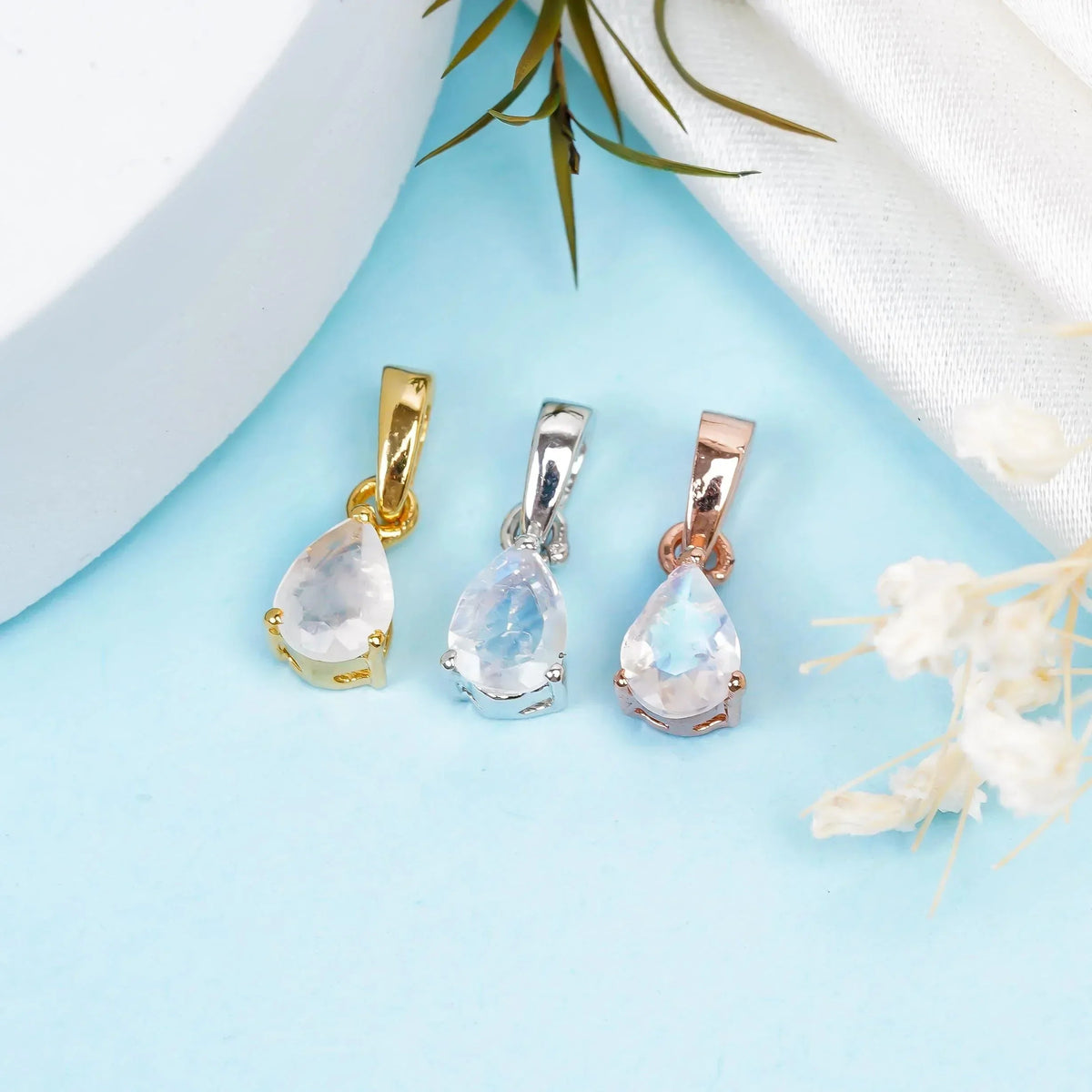

Moonstone is admired for a floating shimmer that seems to move just below its surface. Gemologists call this optical effect adularescence. In online jewelry photographs, the sheen can look stronger or softer depending on the angle of the light, so an informed buyer learns to notice more than the brightest blue frame.
What creates the glow?
Moonstone belongs to the feldspar family. Light interacts with fine internal layers, creating the soft, moving appearance for which it is known. Some pieces have a blue sheen and others a more silvery or white effect. A stone can be attractive even when its flash appears only from certain angles. The color of the stone's body and its transparency also contribute to the final look.
Why cut and lighting matter
Smooth cabochon cuts are popular because their curved surfaces help reveal the moving sheen. A video showing the stone tilted slowly is often more useful than a saturated studio image. Look for natural transitions in the flash rather than assuming every surface should remain bright blue at all times. In person, the effect changes with distance, lighting direction and movement.
Choose the right jewelry style
A moonstone pendant offers a larger uninterrupted view of the glow; a ring keeps it close at hand but benefits from protective wearing habits. Round, oval and pear stones suit different settings. Compare exact millimeter measurements and inspect side views to understand the stone's profile and setting height. For daily use, avoid knocks and store the piece away from harder gems.
The most appealing moonstone is the one whose movement, shape and natural sheen you enjoy in ordinary light.
Explore related pieces: Shop the relevant Himalaya Quartz collection.
Shop Related Products at Himalaya Quartz
Explore these pieces from our current Shopify catalog. Product availability may change.


Related Gemstone Guides
Continue learning with these relevant Himalaya Quartz guides: